Ever wonder why people defend systems that clearly don’t work in their favor? Welcome to the fascinating world of system justification theory—a psychological force that keeps inequality alive, often without us even noticing.
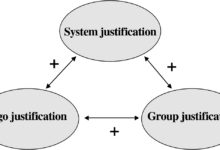
What Is System Justification Theory?

System justification theory (SJT) is a social psychological framework that explains why individuals and groups tend to defend, justify, and maintain existing social, economic, and political systems, even when those systems are disadvantageous to them. Developed in the early 1990s by social psychologists John Jost and Mahzarin Banaji, this theory challenges the traditional assumption that people are primarily motivated by self-interest or group interest.
The Core Idea Behind the Theory
At its heart, system justification theory posits that people have a fundamental psychological need to perceive the status quo as fair, legitimate, and desirable. This need stems from three basic human motivations: epistemic (the need for certainty and structure), existential (the need to reduce threat and anxiety), and relational (the need to belong and share reality with others).
- People prefer stability over chaos.
- Uncertainty is psychologically uncomfortable.
- Justifying the system reduces cognitive dissonance.
This means that even members of disadvantaged groups may internalize and support ideologies that justify inequality—because believing the system is fair makes the world feel more predictable and less threatening.
“System justification is not about blind loyalty; it’s about psychological survival in an uncertain world.” — John T. Jost
How It Differs From Other Theories
Unlike realistic group conflict theory or social identity theory, which emphasize competition between groups and in-group favoritism, system justification theory introduces a third motive: the desire to see the overarching system as good and just. While social identity theory might predict that low-status groups would reject dominant ideologies, SJT explains why they often don’t.
- Social Identity Theory: Focuses on self-esteem and in-group bias.
- Realistic Conflict Theory: Emphasizes competition over resources.
- System Justification Theory: Highlights motivation to legitimize the status quo.
This distinction is crucial because it helps explain phenomena like political conservatism among the poor, acceptance of economic inequality, and resistance to social change—even when such change would benefit marginalized groups.
The Origins and Development of System Justification Theory
System justification theory emerged from a growing body of research that couldn’t be fully explained by existing social psychological models. Why, for example, do women sometimes endorse sexist beliefs? Why do poor people oppose wealth redistribution? These puzzles led Jost and Banaji to propose a new motivational framework.
Foundational Research and Key Papers
The seminal paper, “The Role of Stereotyping in System-Justification and the Production of False Consciousness” (Jost & Banaji, 1994), laid the groundwork for SJT. In it, the authors argued that stereotypes are not just tools of oppression but also serve to rationalize inequality by attributing social outcomes to personal traits rather than structural factors.
- The paper linked ideology to system stability.
- It introduced the concept of “false consciousness”—adopting beliefs that serve the interests of the powerful, not oneself.
- Empirical evidence showed that disadvantaged groups often express lower self-esteem and higher system justification.
Subsequent research expanded the theory across cultures, political systems, and historical periods. You can read the original study on APA PsycNet.
Evolution of the Theory Over Time
Since its inception, system justification theory has evolved to incorporate insights from neuroscience, political science, and behavioral economics. Researchers have explored how system justification operates at both conscious and unconscious levels, and how it interacts with personality traits like authoritarianism and social dominance orientation.
- Neuroimaging studies show reduced amygdala activity when people justify the system, suggesting emotional regulation benefits.
- Longitudinal data reveal that high system justification predicts resistance to policy change.
- Cross-cultural studies confirm its presence in both democratic and authoritarian regimes.
Today, SJT is recognized as a cornerstone of political psychology, offering a powerful lens for understanding ideological resistance and social inertia.
Psychological Mechanisms Behind System Justification
Understanding how system justification works requires diving into the cognitive and emotional machinery that drives it. It’s not just about belief—it’s about how the mind copes with complexity, threat, and uncertainty.
Epistemic Motives: The Need for Certainty
Humans are wired to reduce ambiguity. We prefer clear, predictable explanations for how the world works. System justification satisfies this epistemic need by offering a coherent narrative: the system works, outcomes are deserved, and change is risky.
- People high in need for cognitive closure are more likely to justify the system.
- Simplistic ideologies (e.g., meritocracy) are especially appealing under uncertainty.
- Just-world beliefs—that people get what they deserve—are a key component.
For example, believing that poverty results from laziness (rather than structural barriers) makes the world feel more controllable and less chaotic.
Existential Motives: Coping With Threat
Fear and anxiety amplify system justification. When people feel threatened—by economic instability, terrorism, or social upheaval—they are more likely to support the status quo and authoritarian leaders.
- After 9/11, Americans showed increased support for the government and existing institutions.
- Experiments show that mortality salience (reminders of death) increases system justification.
- This is linked to terror management theory, which shares conceptual overlap with SJT.
In one study, participants reminded of their mortality were more likely to defend the economic system and oppose redistributive policies. Learn more about this in Psychological Science.
Relational Motives: The Need to Belong
Humans are social creatures. We want to share reality with others and avoid conflict. Justifying the system fosters social cohesion—even if it means accepting inequality.
- Conforming to dominant beliefs strengthens group bonds.
- Challenging the system can lead to ostracism or stigma.
- Collective rationalization helps maintain social harmony.
This motive is especially strong in collectivist cultures, where group stability is prioritized over individual dissent.
System Justification Theory and Social Inequality
One of the most powerful applications of system justification theory is in explaining the persistence of social inequality. Despite widespread awareness of injustice, structural inequities endure—partly because of psychological resistance to change.
How SJT Perpetuates Economic Inequality
System justification leads people to believe that economic disparities are natural, inevitable, or even fair. This undermines support for progressive taxation, welfare programs, and labor rights.
- Belief in meritocracy justifies wealth gaps as outcomes of effort and talent.
- Low-income individuals may oppose minimum wage increases, fearing inflation or job loss.
- Studies show that higher system justification correlates with lower support for redistribution.
In the U.S., for instance, many working-class voters support tax cuts for the wealthy, aligning with ideologies that favor the current economic order. This paradox is explained by SJT’s emphasis on system loyalty over self-interest.
Racial and Gender Inequality Through the SJT Lens
System justification theory also illuminates how marginalized groups internalize stereotypes and ideologies that justify their lower status.
- Women may endorse benevolent sexism (e.g., “men should protect women”) because it affirms social harmony.
- Racial minorities may attribute discrimination to personal failure rather than systemic racism.
- LGBTQ+ individuals in conservative societies may suppress their identity to fit societal norms.
These internalizations reduce psychological discomfort but reinforce oppression. Research shows that system justification is higher among members of disadvantaged groups when alternatives seem unattainable or threatening.
“The most potent form of oppression is when the oppressed defend the system that oppresses them.” — Adapted from Paulo Freire
Political Implications of System Justification Theory
System justification theory has profound implications for politics, ideology, and governance. It helps explain why people support policies that harm their interests and resist reforms that could help them.
Link Between SJT and Political Conservatism
There is a strong correlation between system justification and political conservatism. Conservatives tend to score higher on measures of system justification, which aligns with their emphasis on tradition, stability, and hierarchy.
- Conservatives are more likely to believe the system is fair and functioning well.
- They express lower support for radical change or wealth redistribution.
- This is not just ideological—it’s rooted in deeper psychological needs for order and certainty.
However, it’s important to note that system justification is not exclusive to conservatives. Liberals can also justify aspects of the system, especially when it comes to national identity or democratic institutions.
Resistance to Social Change and Reform
One of the most insidious effects of system justification is its role in stifling social progress. Movements for racial justice, gender equality, and climate action often face resistance—not just from elites, but from the public, including those who would benefit.
- Black Lives Matter protests are sometimes met with calls to “respect the law,” reflecting system loyalty.
- Climate change deniers often frame environmental regulations as threats to economic stability.
- Universal healthcare is opposed by some as “government overreach,” despite its benefits.
SJT explains this resistance as a defense mechanism: change introduces uncertainty, and the mind prefers a flawed status quo to an unpredictable future.
System Justification in Everyday Life
System justification isn’t just an academic concept—it shapes our daily decisions, beliefs, and interactions in subtle but powerful ways.
Workplace Dynamics and Organizational Loyalty
Employees often justify unfair workplace practices, such as low wages, long hours, or lack of promotion opportunities, by attributing them to personal shortcomings or market necessity.
- “I’m not getting promoted because I’m not working hard enough.”
- “The CEO deserves that salary because he took risks.”
- “If I just hustle more, I’ll make it.”
This mindset discourages collective action and unionization. Companies often reinforce this through narratives of meritocracy and individual responsibility.
Media and Cultural Narratives
Media plays a crucial role in reinforcing system justification through storytelling. Movies, news, and advertising often portray the rich as deserving and the poor as lazy or irresponsible.
- Reality TV shows glorify rags-to-riches stories, implying anyone can succeed.
- News coverage of protests often focuses on violence, framing dissent as destabilizing.
- Advertising promotes consumerism as a path to happiness, reinforcing capitalist values.
These narratives normalize inequality and discourage critical thinking about systemic flaws.
Critiques and Controversies Surrounding System Justification Theory
While widely influential, system justification theory has faced criticism from various quarters. Some question its assumptions, methodology, or political implications.
Academic Criticisms and Limitations
Critics argue that SJT overemphasizes passivity and underestimates agency. They point out that people resist oppression in many ways, even if they don’t always challenge the entire system.
- Some say the theory pathologizes conservatism.
- Others argue it doesn’t adequately account for cultural differences.
- Measurement of system justification can be subjective and context-dependent.
Additionally, the theory has been accused of being unfalsifiable—since any support for the system is seen as evidence of justification, even resistance can be reinterpreted as a form of it.
Political and Ideological Backlash
Because SJT challenges the legitimacy of dominant ideologies, it has drawn ire from political conservatives and libertarians who see it as an attack on personal responsibility and free markets.
- Some accuse Jost and colleagues of promoting a liberal bias.
- Others argue that the theory dismisses genuine belief in meritocracy.
- There’s concern that labeling beliefs as “justification” undermines democratic discourse.
Despite this, proponents maintain that SJT is a descriptive, not prescriptive, theory—it aims to explain behavior, not judge it.
How to Recognize and Challenge System Justification
Understanding system justification is the first step toward mitigating its effects. Awareness can empower individuals and movements to foster more equitable and just societies.
Strategies for Critical Thinking
Developing critical consciousness is essential to counteract system justification. This involves questioning assumptions, examining evidence, and recognizing ideological influences.
- Ask: “Who benefits from this belief?”
- Seek out diverse perspectives and marginalized voices.
- Reflect on how your beliefs might serve system stability rather than personal truth.
Education plays a key role. Courses in sociology, history, and critical theory can help people see beyond individualistic explanations of success and failure.
Promoting System Change Without Triggering Defensiveness
Effective social change requires acknowledging people’s need for stability while offering viable, less threatening alternatives.
- Frame reforms as improvements to the system, not its destruction.
- Use narratives that emphasize continuity and shared values.
- Highlight successful examples of change (e.g., civil rights, marriage equality).
Movements that acknowledge people’s fears and offer clear, realistic visions are more likely to succeed.
What is system justification theory?
System justification theory is a psychological concept that explains why people, including those disadvantaged by it, tend to defend and rationalize existing social, economic, and political systems as fair and legitimate.
Why do people justify systems that harm them?
People justify harmful systems to reduce uncertainty, manage anxiety, and maintain social cohesion. Psychological needs for stability and belonging often outweigh immediate self-interest.
Is system justification the same as self-interest?
No. While self-interest focuses on personal gain, system justification involves supporting the status quo even when it’s not personally beneficial. It’s driven by deeper psychological motives like the need for order and certainty.
How is system justification measured?
Researchers use surveys that assess agreement with statements like “In general, the economic system in this country works fairly” or “Most people who want to get ahead can make it if they try hard enough.”
Can system justification be reduced?
Yes. Education, exposure to alternative systems, and fostering critical thinking can reduce system justification. Providing safe, structured pathways for change also helps lower resistance.
System justification theory offers a powerful lens for understanding why inequality persists and why change is so hard. It reveals that resistance to reform isn’t just about politics—it’s deeply psychological. By recognizing the motives behind system justification—epistemic, existential, and relational—we can develop more effective strategies for promoting justice and equity. The goal isn’t to blame individuals, but to create systems where fairness doesn’t require denial or distortion. Awareness is the first step toward transformation.
Further Reading:
